Edge banding might seem like a tiny detail, but it’s the difference between cabinets that fall apart in five years and those that last a quarter-century. The right cabinet edge banding, with the correct adhesive and material, seals out moisture and wear that wrecks cheaper builds. Knowing how to spot quality edge banding fast saves you from costly surprises down the line. Keep reading to learn how we engineer edges that hold up—and why seeing is believing at our Bay Area showroom.
Understanding Edge Banding
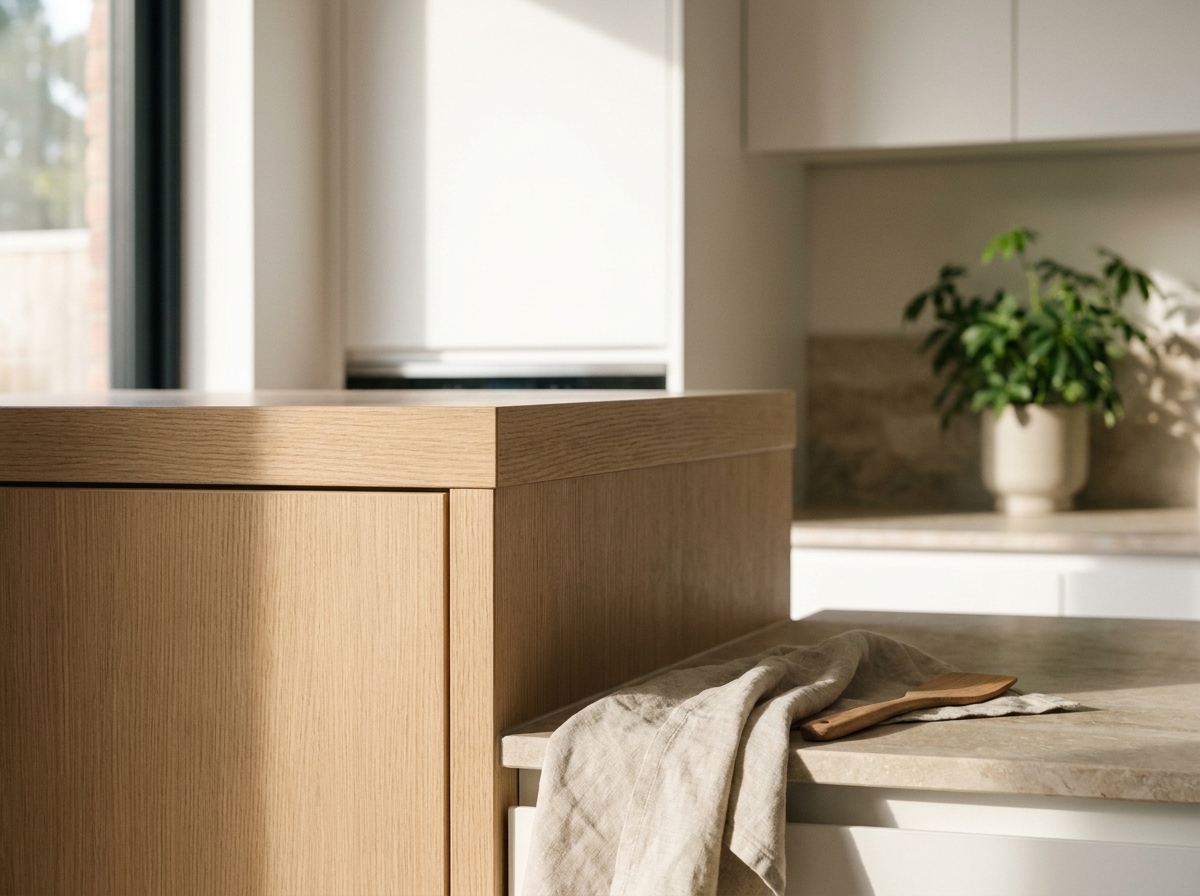
Getting into the nitty-gritty of what holds your cabinets together is crucial for any homeowner or designer. Let’s start by demystifying the concept of edge banding.
What is Edge Banding?
Edge banding is a thin strip used to seal the exposed sides of materials like plywood, particle board, or MDF. It’s the detail that turns raw edges into smooth, finished surfaces that resist wear and tear. This tiny strip plays a big role, preventing moisture from seeping into your cabinets and ensuring they look polished. Without it, you’re looking at rough edges that can chip, swell, or peel over time.
Key Materials and Adhesives
Choosing the right materials and adhesives for edge banding might be more important than you think. Common materials include ABS, PVC, and wood veneer, each having its own set of benefits. ABS is known for its flexibility and impact resistance. PVC is durable and cost-effective. Wood veneer offers a natural look but requires more care.
When it comes to adhesives, EVA glue is widely used for its affordability, while PUR glue offers superior moisture resistance and longevity. Picking the right combination ensures your cabinets not only look good but also stand the test of time.
Importance for Cabinet Durability
It’s often said that the strength of a structure lies in its weakest part. For cabinets, that weak spot can be poor edge banding. Quality edge banding prevents water damage and enhances the overall durability of your cabinets. Beyond just aesthetics, it acts as a barrier against the elements and everyday wear. With proper edge banding, your cabinets can last decades instead of just a few years.
Choosing the Right Edge Banding
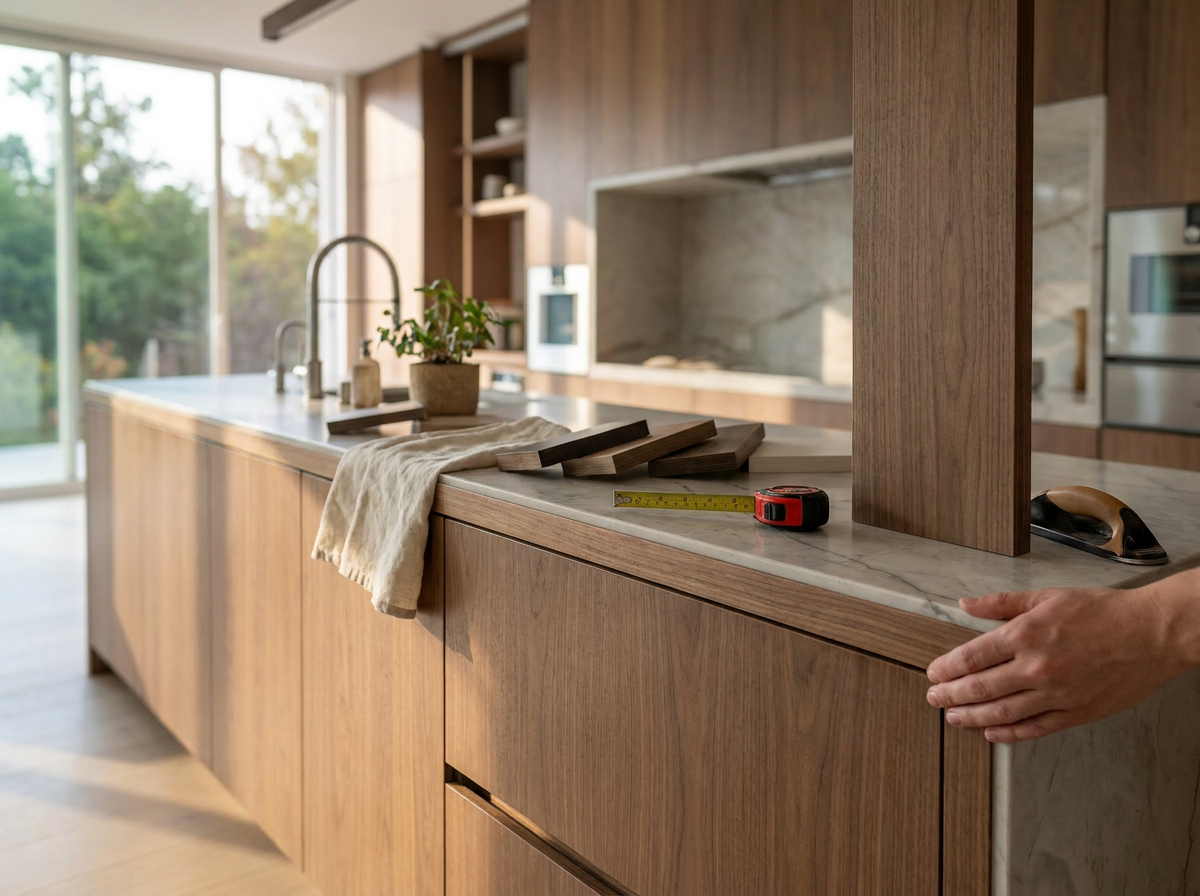
Understanding what edge banding is and why it matters sets the stage for making informed choices. Here’s where you decide what works best for your home.
PUR vs. EVA Glue for Longevity
When it comes to adhesives, the debate often centers around PUR and EVA glue. PUR glue is the gold standard for moisture resistance and long-term durability. It creates a strong bond that can withstand heat and humidity, making it ideal for kitchens and bathrooms. EVA glue, although less expensive, may not offer the same level of durability over time, especially in high-moisture areas. If you’re aiming for a kitchen cabinet lifespan that exceeds expectations, PUR might be your best bet.
Benefits of Zero-Joint Technology
One of the innovations in cabinet making is zero-joint technology. This approach uses laser edge banding to create seamless edges that are nearly invisible. The benefits are twofold: it enhances the aesthetic appeal and significantly improves moisture resistance. The technology ensures that there’s no gap for dirt or water to penetrate, making your cabinets easier to clean and maintain.
Material Options: ABS, PVC, Wood Veneer
Choosing the right material is just as crucial as the adhesive. ABS edge banding offers excellent shock resistance and is a great all-rounder. PVC edge banding is durable and economical, suitable for most household applications. For those looking for a more natural appearance, wood veneer edge banding provides that classic touch, although it may require more maintenance. Each material has its strengths, so consider your specific needs and aesthetic preferences when deciding.
Inspecting and Specifying Edge Banding
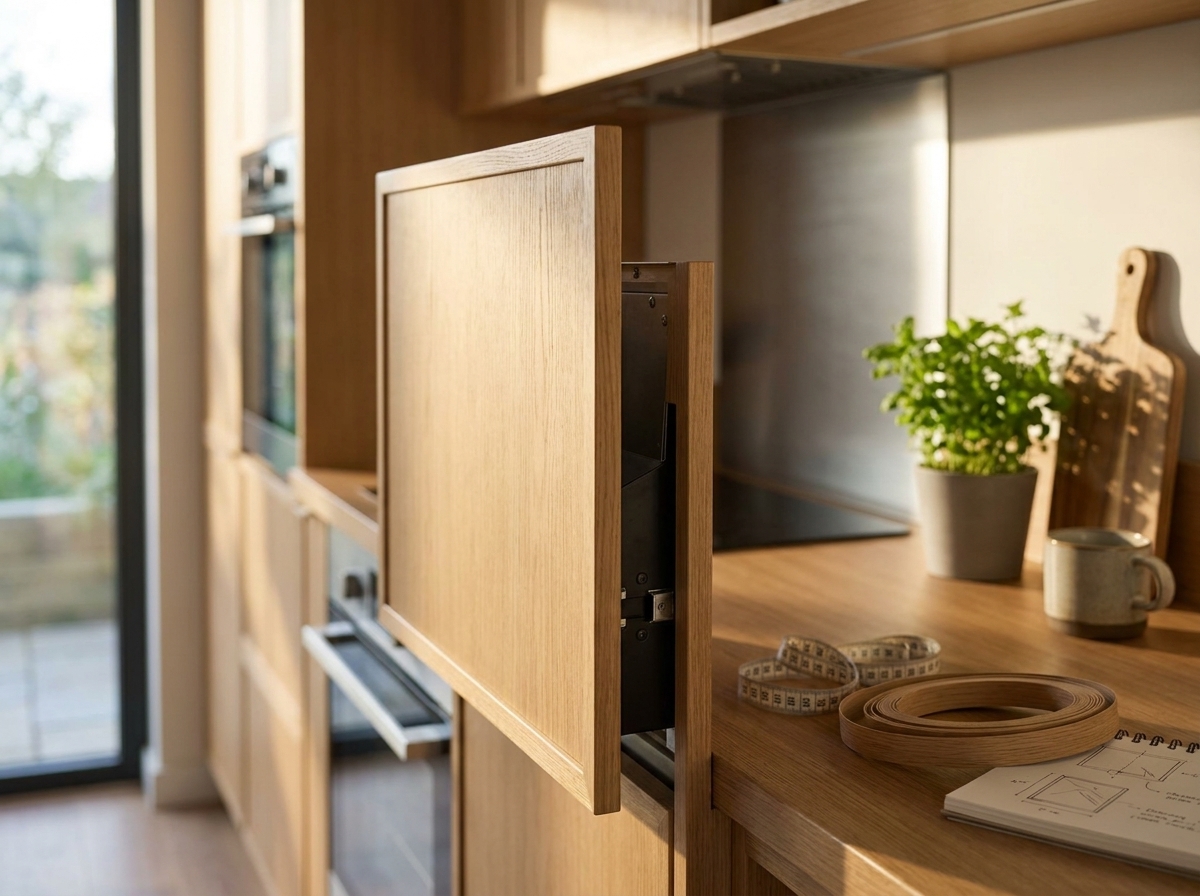
Choosing the right edge banding is only part of the process. Knowing how to inspect and specify it can prevent early failures.
Quick Edge Inspection Tips
A quick inspection can save you from costly mistakes. Start by checking the edges for smoothness and uniformity. A high-quality edge band should show no gaps or visible adhesive. Test the adhesion by rubbing the edge; it shouldn’t peel or shift. These simple steps can tell you a lot about the quality of the edge banding.
Our Specification for Early Failure Prevention
Our approach to edge banding specification is grounded in preventing early failures. We use PUR edge banding for its superior strength and moisture resistance. We also opt for zero-joint technology, ensuring a seamless finish that resists the elements. These choices are not just about longevity; they are about providing a stress-free experience.
Book a Consultation and See for Yourself
The longer you wait to inspect or upgrade your edge banding, the greater the risk of facing issues down the line. We invite you to book a consultation at our Bay Area showroom. See the difference in person, and let us guide you through the options that best fit your needs. It’s a small step that could save you a lot of trouble in the future.