Custom cabinet selection connects the visible finish with the structure, storage and installation behind it. For a Bay Area kitchen, start with the way the room will be used, then approve physical samples and construction details together. A beautiful door sample is only one part of a kitchen that feels resolved when you move back in.
This guide from Ronbow explains how to choose those details. Our promise is “what you see is what you get.” With design, manufacturing and installation handled in-house, the approved design, finishes, materials and price carry through to the installed space, with no hidden costs and no gap between the showroom or rendering and the finished room.
Start with the surfaces you will actually use
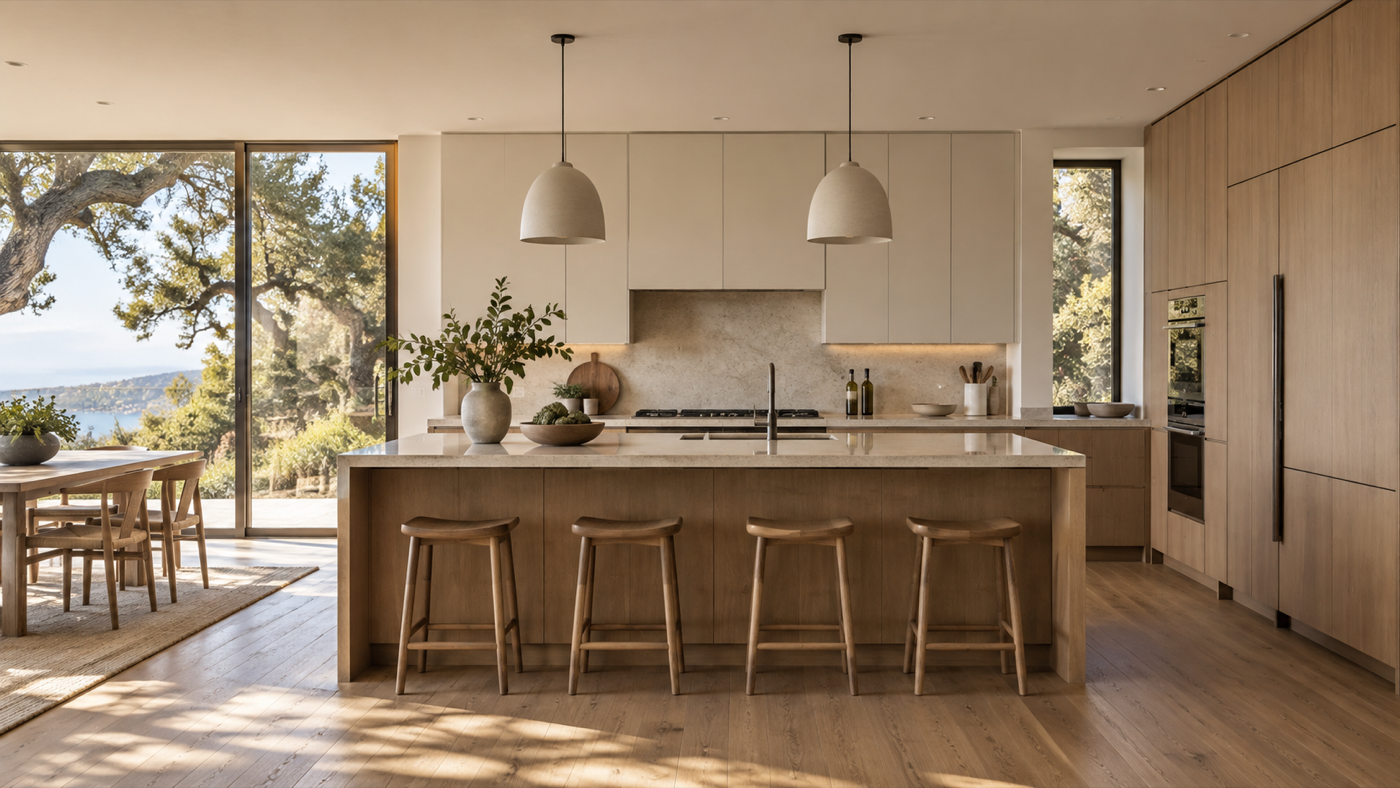
Think through breakfast, food preparation and cleanup before collecting finishes. Identify the drawer opened with wet hands, the cabinet beside the dishwasher and the pantry used several times a day. These locations deserve close attention to edge treatment, opening action and care instructions.
For an open kitchen, review the cabinets from the dining area as well as from the sink. Exposed island ends and tall cabinet sides become part of the room’s architecture. Ask to see how panels, fillers and doors meet. A small sample cannot explain those transitions by itself.
Choose a finish for its appearance and upkeep
Ronbow offers real wood veneer in species including oak, walnut and ash, alongside painted, laminate and acrylic surfaces. Veneer preserves natural grain over a stable substrate, helping reduce the risk of movement associated with solid wood as humidity changes. Coordinated grain direction, fine edge finishing and complete surface treatment give the wood a continuous appearance across adjoining fronts. Painted cabinetry offers a different route through custom color and sheen.
A veneer sample deserves a second look at the edge. Examine how the grain on the face relates to the adjoining panel, and decide whether natural variation is part of the look you want. For a long cabinet run, request a view of the proposed grain direction across several fronts rather than judging one door in isolation.
Ronbow’s 1,000+ color options allow the cabinet palette to respond to flooring, counters and adjacent rooms. Narrow the selection to a small group, then view actual samples vertically in the room’s daylight and evening lighting. Compare undertones beside the intended countertop, rather than relying on a phone screen.
| Selection | What to examine | What to record |
|---|---|---|
| Wood veneer | Grain direction and variation | Species and approved sample |
| Painted surface | Color, sheen and edge coverage | Color reference and finish |
| Laminate or acrylic | Surface appearance and edge junction | Material and matching edge |
| Handleless front | Grip comfort and opening action | Selected opening system |
Look closely at edges and cabinet construction
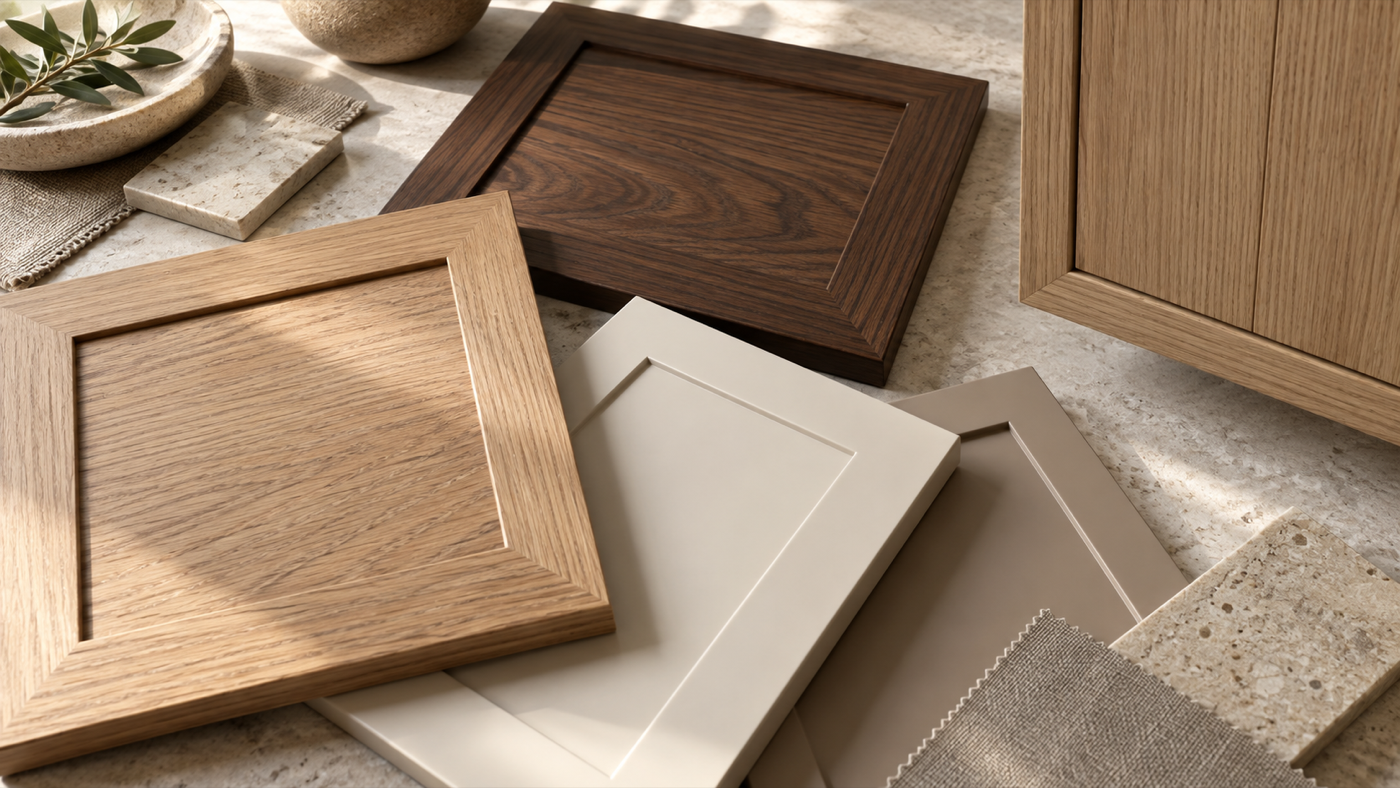
Ronbow uses PUR or hot-air edge banding according to the material. PUR can produce a nearly invisible glue line, while hot-air technology creates a near-zero-glue-line appearance. Both approaches provide heat and water resistance; compared with conventional EVA edge banding, these options can reduce the visible seam and support durability in everyday use. Inspect the selected material’s edge in angled light, where the junction is easier to see.
The product advantages also extend inside the cabinet. Concealed dowel positioning, interlocking construction and internal fastening help reduce visible fixings. Together with coordinated side and filler panels, these details support a consistent appearance across the whole run. Ask your designer to explain the construction selected for your particular cabinets.
Ronbow’s manufacturing story centers on precision manufacturing and consistent detailing. At a showroom review, examine door alignment, the gaps between fronts and the transition around an exposed end panel. These are practical ways to understand an installation beyond its color palette. Water-resistant edge treatments still require appropriate care and prompt cleanup of spills.
Understand the finish system beneath the color
Ronbow combines water-based paint with UV curing for its painted custom cabinetry. The water-based system helps reduce strong odors and VOC emissions associated with traditional solvent-based finishes. UV curing supports resistance to scratches, stains, abrasion, chemicals and yellowing. Multi-layer spraying, infrared drying and an automated flat spray line help produce an even, consistent finish across doors and panels. Learn more about Ronbow’s water-based and UV finishing process.
Surface effects include matte, ultra-matte, high-gloss and metallic appearances, with custom colors and sheen levels available to coordinate with walls and counters. Review color and gloss together: a broad cabinet wall reflects light differently from a small handheld sample.
Thoughtful finishes for homes with pets
For households with pets, everyday durability and indoor air quality are important considerations when choosing cabinetry. Ronbow’s water-based paint and UV-curing process combines low-odor, low-VOC finishing with resistance to stains, scratches and everyday wear. These qualities address practical priorities in a home shared with pets: a durable cabinet surface, manageable upkeep and attention to the indoor environment. Paired with curved cabinet ends and dedicated storage for pet essentials, the finish becomes part of a kitchen designed around the whole household.
Consider the cabinet core as well as the finish
Ronbow offers formaldehyde-free cabinet core options alongside its low-VOC water-based UV finishing system. The actual configuration depends on the selected board, door front and order specifications. Ask your designer to identify the core in the proposed cabinet package so that the material choice reflects your indoor air quality priorities.
Ronbow’s relevant cabinet materials comply with TSCA Title VI and CARB requirements. The EPA consumer guidance on composite wood products explains the regulated materials and compliance labeling. Keep the selected board information with the finish schedule for a clear record of the cabinet’s composition.
Discuss cleaning instructions at the same review. The recommended method should suit the selected coating and substrate, especially around frequently handled doors and areas exposed to splashes.
Make storage and opening systems part of the decision
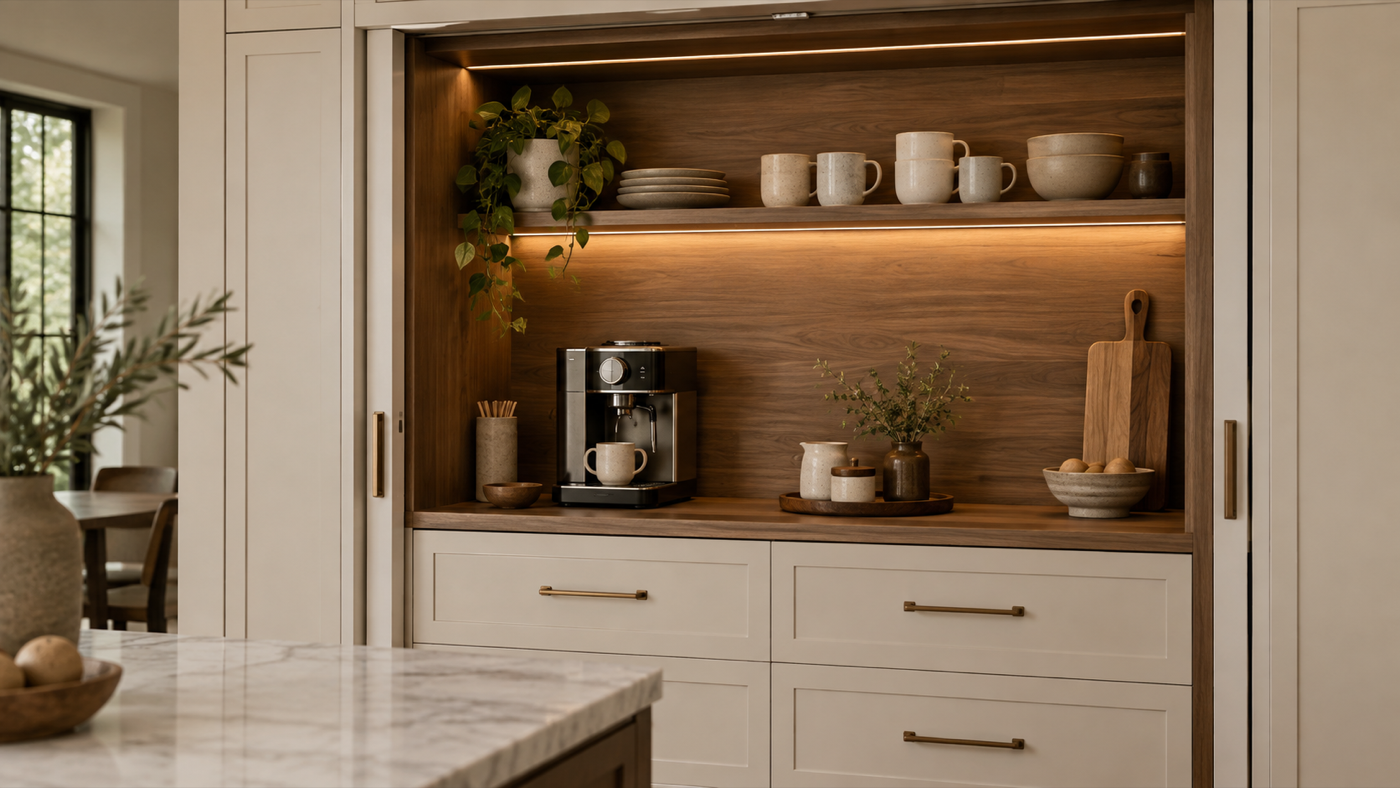
Ronbow’s opening options include GOLA channels, wood GOLA and push-to-open systems. Concealed soft-close hinges help keep hardware discreet while controlling the closing action. Try the proposed arrangement on both a drawer and a tall door, considering reach, grip and comfort for the people who use the room. These mechanisms can work alongside hidden cabinet fixings to create a clean, modern elevation.
Pocket doors offer another useful option. They retract into or alongside the cabinet so a coffee or breakfast station can open for use and close into a quiet elevation. Review the usable interior width, door movement and requirements of the appliances you plan to place inside. Closing a door should never become a substitute for following the appliance manufacturer’s operating instructions.
Curved end cabinets and side panels let the cabinet line turn gradually into an adjoining living space. These elements can shape an island, a corner or a freestanding focal cabinet. Combining a curve with handleless fronts, ultra-matte paint or natural veneer creates a European-inspired modern composition. At an island, review the curve from the seating and working sides, and mark its footprint on the floor to assess the passage around it.
Bring the selected surfaces together
Build a small material board around the final cabinet sample. Place the counter and flooring beside it, then add a note identifying the selected sheen, grain direction and edge treatment. Photograph the arrangement as a memory aid, while retaining the physical samples for color review. This gives your designer a concrete reference for the surfaces that will be seen together.
Ronbow manufactures locally in Livermore, California, connecting design, measurement, production and installation within one integrated service. Cabinet bodies, fronts, drawers, hardware, finishes and functional fittings can be combined around the project’s requirements. The same approach supports kitchens, bathrooms, closets, home offices and other residential spaces, making it possible to coordinate materials across the home.
Interior designers and architects can work with Ronbow on the finish composition, while general contractors coordinate the installation conditions. We recommend Ronbow’s in-house installation team for the final fit; customers using their own contractor receive complete installation drawings.
Frequently asked questions
Will my finished kitchen match what I was shown?
Yes. “What you see is what you get” applies to the actual material choices you approve, including the surface, sheen and cabinet detailing. Ronbow’s in-house designers, manufacturing team and installers use those selections to deliver the agreed kitchen at the approved price.
Does Ronbow work with designers and contractors?
Yes. A designer can bring countertop and floor samples for a finish review; an architect can resolve visible cabinet transitions; and a general contractor can discuss site conditions with Ronbow. These conversations help the selected materials work within the room.
What warranty covers Ronbow cabinetry?
Ronbow cabinetry is covered by a limited lifetime warranty, subject to its terms. Review the warranty information alongside the care guidance for the selected surfaces.
Bring your preferred materials and room plans to a Bay Area showroom. Schedule a free consultation to turn the finish palette into a coordinated cabinet design.